Population Characteristics Reshaping Reward Programs in Austria's Licensed Gaming Industry
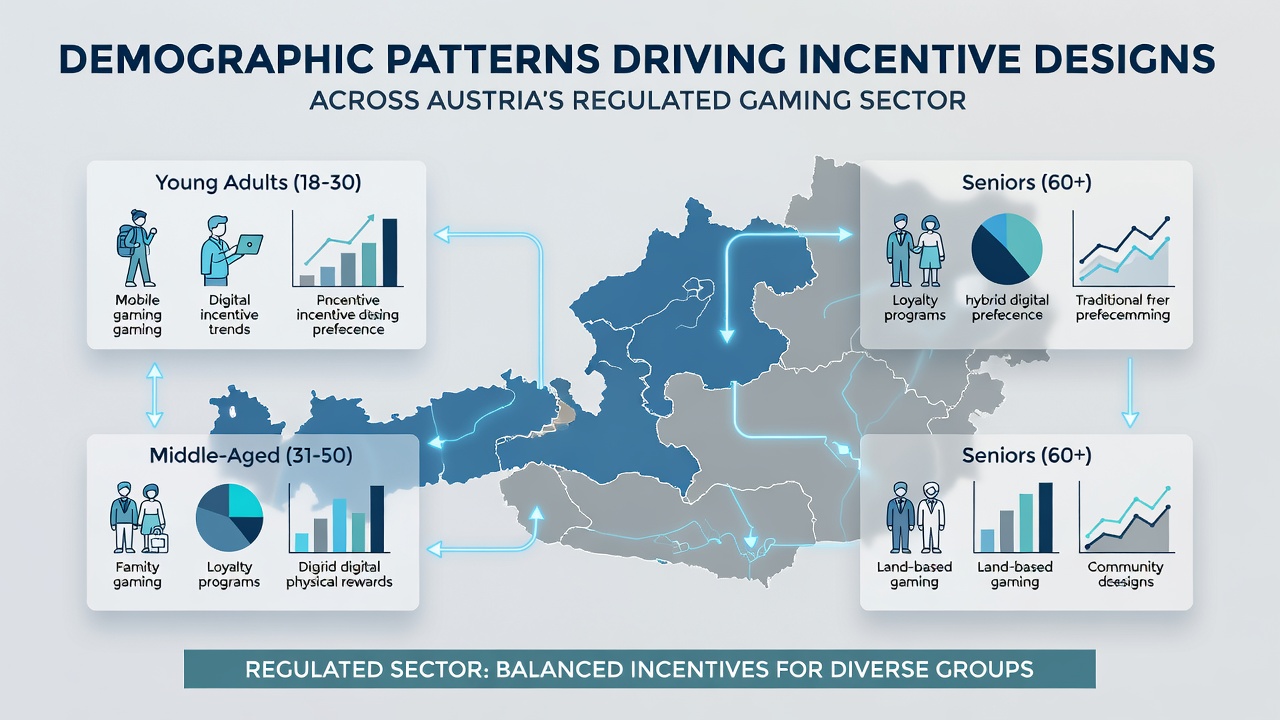
Data from Austrian regulatory records through November 2026 shows that age distributions, income brackets, and regional settlement patterns continue to guide how operators structure deposit matches, free spins, and loyalty tiers within the licensed market. Younger cohorts between 18 and 34 represent a growing share of new accounts, while players aged 45 and above maintain higher average session lengths according to aggregated industry statistics released by the Austrian Federal Ministry of Finance. These figures prompt operators to calibrate welcome offers toward smaller initial deposits with quicker cash-out thresholds for one group, while extending tiered cashback programs for the other.
Age Bands and Offer Calibration
Operators adjust bonus structures when registration data reveals shifts in player age profiles. Platforms serving higher percentages of users under 30 emphasize instant-win mechanics and shorter wagering cycles, whereas those tracking larger numbers of mid-career professionals introduce deposit milestones that unlock progressive rewards over several weeks. Research compiled by the European Gaming and Betting Association indicates that operators who align these parameters with actual registration demographics report steadier retention rates across quarterly reporting periods. The pattern holds steady into late 2026, with no abrupt deviation recorded in monthly compliance filings.
Income Levels and Deposit Thresholds
Household income data, drawn from voluntary player surveys submitted during account verification, influences minimum deposit requirements attached to promotional codes. Markets with elevated median incomes see more frequent use of higher deposit bands paired with larger match percentages, while regions showing lower average earnings feature scaled-down entry points that still satisfy regulatory caps on bonus value. Figures released by Statistics Austria demonstrate that these adjustments correlate with reduced bonus abuse incidents, because offers match the spending capacity reported by the majority of verified accounts in each segment. Observers note that such alignment reduces the number of abandoned bonus claims that previously appeared in regulatory audits.
Urban and Rural Settlement Patterns
Geographic distribution data further refines incentive design. Urban centers such as Vienna and Graz record higher mobile engagement, leading operators to prioritize time-limited mobile-exclusive reload bonuses. Rural districts, where desktop access remains more common, receive promotions that extend validity windows to accommodate slower connection speeds and different play schedules. A 2025 study from the University of Innsbruck's Institute for Economic Research found that these location-specific tweaks increased completed wagering requirements by measurable margins in both settings, without altering the overall regulatory framework that caps total bonus exposure per player.
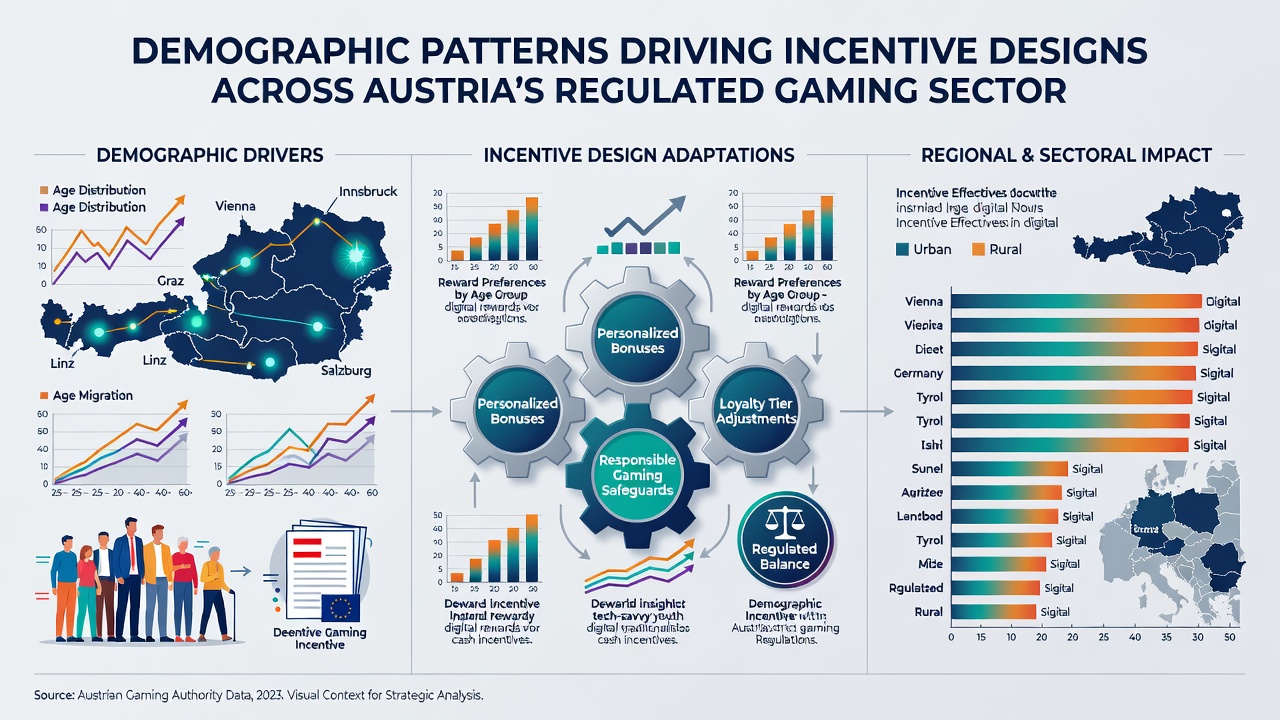
Gender balance within player databases also shapes loyalty mechanics. Platforms reporting near-equal participation between men and women introduce gender-neutral reward categories such as tournament entries and merchandise redemptions rather than gender-targeted visuals. Data tracked through November 2026 shows these neutral categories maintain consistent redemption rates across both groups, supporting sustained account activity without requiring separate marketing streams.
Regulatory Oversight and Data Use
Austria's licensing authority requires operators to submit anonymized demographic summaries alongside each bonus campaign filing. These submissions allow regulators to verify that promotional parameters do not disproportionately target vulnerable age or income segments. Compliance reports published in 2026 confirm that operators incorporating settlement pattern and age-band data into their designs encounter fewer corrective actions during routine reviews. The process relies on statistical correlation rather than individual profiling, preserving data-protection standards while enabling evidence-based incentive adjustments.
Cross-border comparisons provide additional context. Canadian provincial reports and Australian state gaming summaries similarly document how operators refine bonus structures when registration data shows rising shares of older or lower-income cohorts. Austrian operators reference these international patterns during internal planning sessions, although local rules on maximum bonus percentages and wagering multipliers remain distinct. The result is a domestic market where incentive designs track measurable population characteristics without crossing regulatory boundaries.
Conclusion
Demographic records collected through November 2026 continue to supply the factual basis for incentive adjustments across Austria's regulated gaming sector. Age, income, location, and gender distributions each contribute distinct variables that operators incorporate into bonus parameters while remaining within the limits set by licensing conditions. Regulatory filings and academic studies document these linkages without indicating future deviation from the established approach. The patterns observed in current data therefore supply the operational foundation for ongoing refinements to reward structures in the licensed market.