Demographic Factors Driving Bonus Variations in Austria's Controlled Gambling Environment
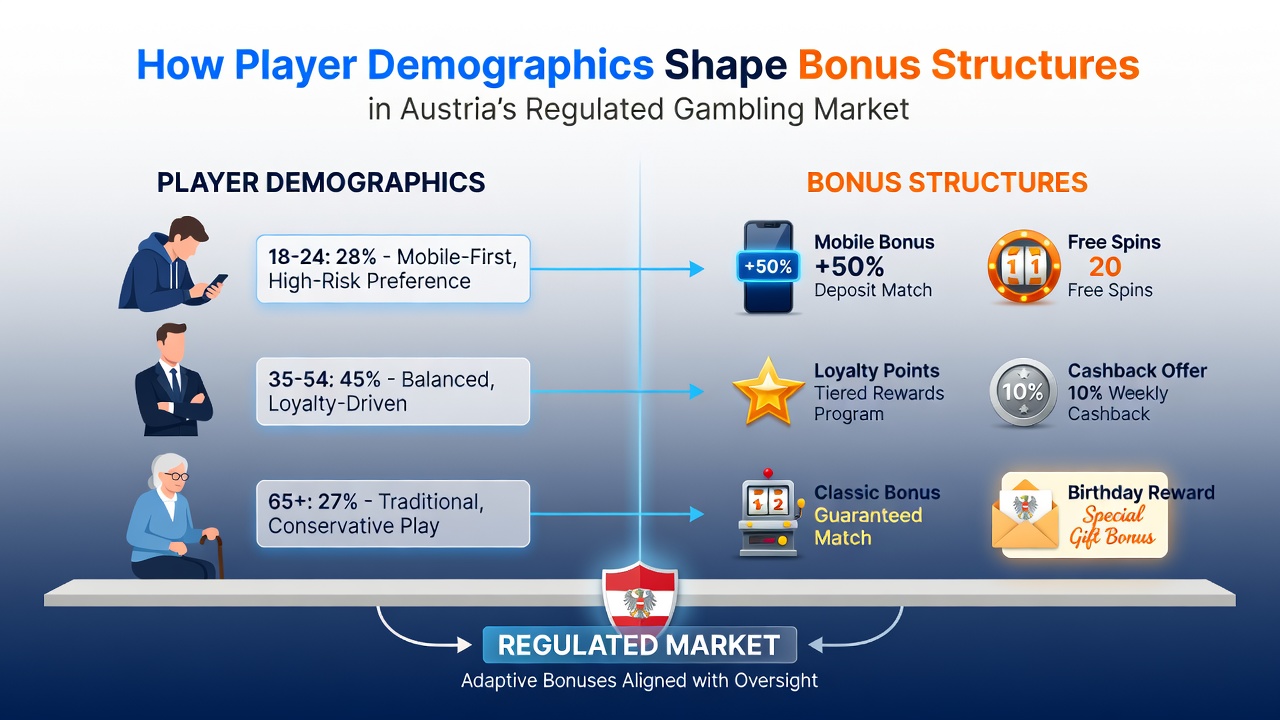
Austria maintains a tightly controlled gambling sector under the Glücksspielgesetz, where licensed operators must align bonus structures with documented player profiles rather than uniform promotions. Data from regulatory filings shows that age, residency patterns, income brackets, and gaming preferences directly influence the types of incentives available, with operators adjusting offers to match observed behaviors across different groups. Operators segment their player bases using registration details and transaction histories, which then guide the design of welcome packages, reload bonuses, and loyalty rewards. Younger adults between 18 and 34, for instance, receive higher volumes of free spin offers on slot titles, while those aged 45 and above encounter more frequent cashback or deposit match structures tied to table games. These patterns emerge from aggregated play data submitted to oversight bodies, revealing consistent differences in session length and preferred game categories across cohorts. Geographic distribution within Austria further refines these structures. Players registered in urban centers such as Vienna and Graz see promotions that emphasize live dealer experiences and higher wagering thresholds, whereas those in smaller municipalities encounter bonuses with lower minimum deposits and extended validity periods. This differentiation stems from licensing requirements that encourage operators to tailor retention tools to regional participation rates reported in annual market reviews. Income and spending patterns add another layer. Research compiled by the Austrian Federal Ministry of Finance indicates that mid-range depositors, typically between €50 and €200 per session, qualify for tiered loyalty programs that scale rewards based on volume, while higher spenders access personalized invitations to exclusive tournaments. Lower-frequency participants, by contrast, receive time-limited reload offers designed to encourage repeat visits without exceeding responsible play thresholds. Gender breakdowns also appear in the data, though operators apply them cautiously due to privacy rules. Reports from the European Gaming and Betting Association highlight that male players in the 25-40 range show stronger engagement with sports betting cashback, prompting operators to allocate larger portions of their bonus budgets to that category, whereas female demographics correlate with higher take-up of casino welcome packages featuring extended playtime credits.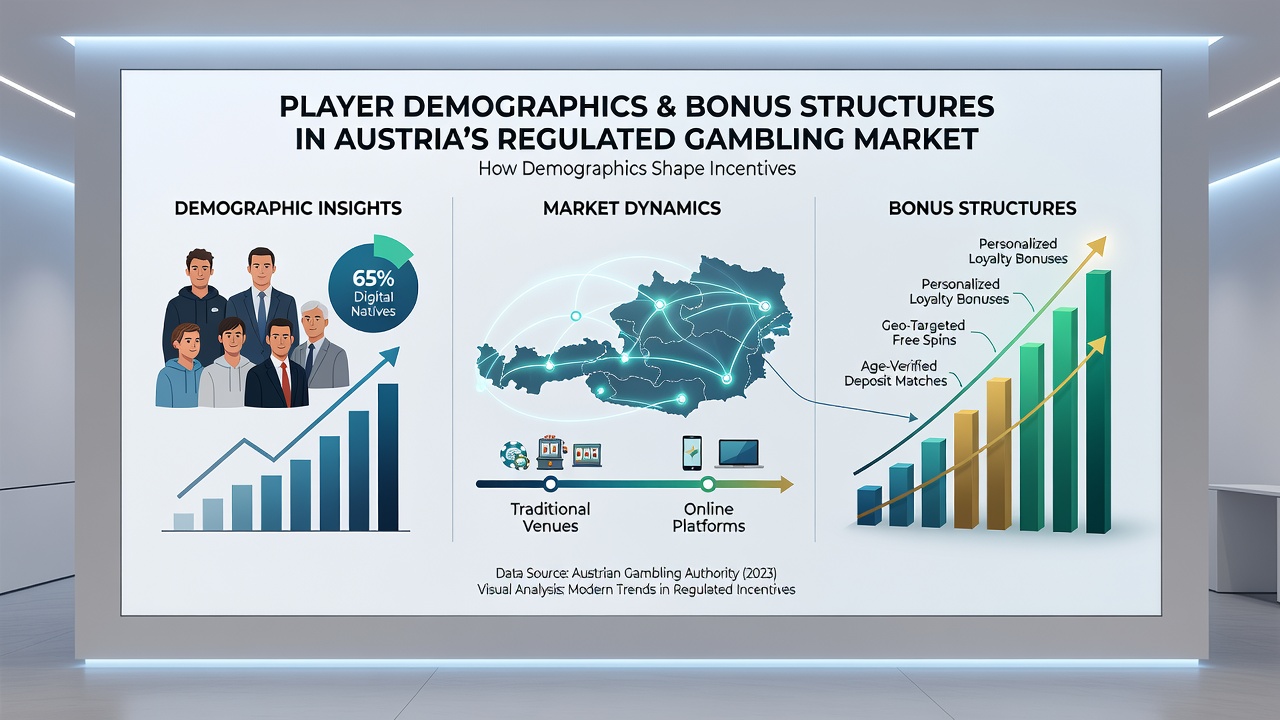
Austria maintains a tightly controlled gambling sector under the Glücksspielgesetz, where licensed operators must align bonus structures with documented player profiles rather than uniform promotions. Data from regulatory filings shows that age, residency patterns, income brackets, and gaming preferences directly influence the types of incentives available, with operators adjusting offers to match observed behaviors across different groups. Operators segment their player bases using registration details and transaction histories, which then guide the design of welcome packages, reload bonuses, and loyalty rewards. Younger adults between 18 and 34, for instance, receive higher volumes of free spin offers on slot titles, while those aged 45 and above encounter more frequent cashback or deposit match structures tied to table games. These patterns emerge from aggregated play data submitted to oversight bodies, revealing consistent differences in session length and preferred game categories across cohorts. Geographic distribution within Austria further refines these structures. Players registered in urban centers such as Vienna and Graz see promotions that emphasize live dealer experiences and higher wagering thresholds, whereas those in smaller municipalities encounter bonuses with lower minimum deposits and extended validity periods. This differentiation stems from licensing requirements that encourage operators to tailor retention tools to regional participation rates reported in annual market reviews. Income and spending patterns add another layer. Research compiled by the Austrian Federal Ministry of Finance indicates that mid-range depositors, typically between €50 and €200 per session, qualify for tiered loyalty programs that scale rewards based on volume, while higher spenders access personalized invitations to exclusive tournaments. Lower-frequency participants, by contrast, receive time-limited reload offers designed to encourage repeat visits without exceeding responsible play thresholds. Gender breakdowns also appear in the data, though operators apply them cautiously due to privacy rules. Reports from the European Gaming and Betting Association highlight that male players in the 25-40 range show stronger engagement with sports betting cashback, prompting operators to allocate larger portions of their bonus budgets to that category, whereas female demographics correlate with higher take-up of casino welcome packages featuring extended playtime credits.Regulatory Framework and Data Requirements
Austria's licensing process obliges operators to submit demographic analyses as part of their compliance documentation, which authorities review to ensure promotions do not disproportionately target vulnerable segments. This requirement has led to the creation of bonus libraries segmented by verified age and location markers, reducing the risk of uniform campaigns that ignore local participation statistics. As preparations advance for updated reporting standards scheduled around September 2026, several operators have begun testing dynamic bonus engines that adjust offers in real time based on player cohort signals. These systems rely on anonymized datasets rather than individual targeting, maintaining compliance while responding to shifts in registered player composition.Payment Method Correlations
Payment preferences intersect with demographic variables to shape bonus eligibility. Players favoring bank transfers, often those in older age brackets, encounter bonuses that credit instantly upon verified deposits, whereas e-wallet users, predominantly younger cohorts, receive instant free spin allocations tied to first transactions. Figures released by EU gambling oversight summaries confirm these correlations influence how operators allocate promotional budgets across payment channels.